Bitcoin Bear Market Time Pain Trap Signals Slow Bottom Ahead
The bitcoin bear market time pain trap suggests a slow bottoming phase, requiring months of stability before a true market recovery begins.

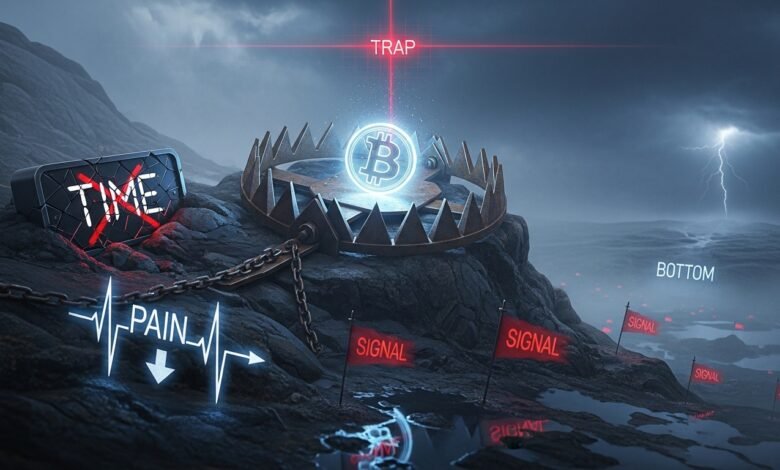
The bitcoin bear market time pain trap is a concept that’s quietly shaping investor expectations in today’s crypto landscape. While dramatic crashes often dominate headlines, seasoned market participants understand that the real challenge isn’t always price declines—it’s time. In many cases, Bitcoin doesn’t form a bottom through sharp reversals, but through extended periods of sideways, uneventful movement that test patience and conviction.
This prolonged phase, often described as “boring,” can stretch across months, draining enthusiasm and forcing weaker hands out of the market. Investors expecting quick rebounds may find themselves caught in this time-based capitulation, where the emotional toll of waiting becomes more significant than price volatility itself. Understanding this phenomenon is crucial for anyone looking to navigate the current crypto cycle effectively and position themselves for the next bullish phase.
What Is the Bitcoin Bear Market Time Pain Trap?
 The bitcoin bear market time pain trap refers to a psychological and structural phase in the market where prices stabilize but fail to generate meaningful upward momentum. Instead of dramatic drops, Bitcoin trades within a narrow range, creating a sense of stagnation.
This phase is particularly challenging because it doesn’t trigger panic selling like a crash would. Instead, it gradually erodes investor confidence. Over time, traders lose interest, capital exits the market, and volatility compresses. This is where the “pain” shifts from financial losses to emotional exhaustion.
Historically, Bitcoin has gone through multiple such phases. After significant downturns, the asset often enters a consolidation period lasting several months before a new trend emerges. This pattern reinforces the idea that markets need time—not just price corrections—to establish a sustainable bottom.
Why “Boring” Markets Are Essential for a True Bottom
A key feature of the bitcoin bear market time pain trap is the absence of excitement. Prices move sideways, news cycles quiet down, and trading volumes decline. While this may seem uneventful, it plays a critical role in market recovery.
During these periods, speculative excess is gradually flushed out. Overleveraged positions are reduced, and long-term investors quietly accumulate assets. This process helps stabilize the market and creates a stronger foundation for future growth.
The lack of volatility also discourages short-term traders, leading to reduced noise and more organic price discovery. In essence, the market resets itself, allowing supply and demand to reach equilibrium.
The Psychology Behind Time-Based Capitulation
Unlike sharp sell-offs, which trigger immediate fear, the time pain trap works slowly. Investors who entered the market with high expectations begin to question their decisions as weeks turn into months without significant movement.
This psychological pressure often leads to what analysts call “time capitulation.” Instead of selling due to losses, investors exit simply because they are tired of waiting. This behavior is critical in forming a market bottom, as it removes weak hands and leaves behind more resilient participants.
Over time, this shift in market composition creates a healthier environment for the next bull cycle.
Historical Examples of Bitcoin’s Time Pain Trap
Bitcoin’s past cycles provide valuable insights into the bitcoin bear market time pain trap. After major corrections, the asset has repeatedly entered extended consolidation phases before recovering.
In previous cycles, these periods often lasted between six to twelve months. Prices remained relatively stable, with occasional minor fluctuations, but no clear trend emerged. During this time, public interest waned, and media coverage decreased significantly.
Eventually, however, these quiet phases gave way to strong upward movements. This pattern suggests that patience is not just a virtue in crypto investing—it’s a necessity.
Lessons From Previous Market Cycles
One of the most important lessons from past cycles is that bottoms are rarely formed in moments of panic. Instead, they develop over time through a process of accumulation and stabilization.
Investors who recognize the bitcoin bear market time pain trap can better align their strategies with market realities. Rather than chasing quick gains, they focus on long-term positioning and risk management.
This approach not only reduces stress but also increases the likelihood of benefiting from the next major rally.
Key Indicators That the Market Is in a Time Pain Phase
Identifying the bitcoin bear market time pain trap requires observing both technical and behavioral signals. These indicators often include reduced volatility, declining trading volumes, and a lack of strong directional trends.
Another common sign is decreased public interest. Search trends, social media activity, and news coverage all tend to decline during these periods. This reflects a broader shift in market sentiment from excitement to apathy.
On-chain data can also provide insights. Metrics such as long-term holder accumulation and reduced exchange inflows often indicate that the market is stabilizing.
The Role of Institutional Investors
Institutional participation has added a new dimension to the bitcoin bear market time pain trap. Unlike retail investors, institutions tend to operate on longer time horizons and are less influenced by short-term price movements.
During periods of low volatility, these players often accumulate assets quietly. Their involvement can contribute to market stability and reduce the likelihood of extreme price swings.
However, their presence also means that recoveries may take longer to materialize, as large-scale accumulation requires time.
Why the Current Market May Need More Time
The current crypto environment shows several characteristics of the bitcoin bear market time pain trap. Price movements have become less volatile, and the market appears to be searching for direction.
Macroeconomic factors, such as interest rates and global liquidity, also play a role. These external influences can prolong the consolidation phase, delaying the onset of a new bull cycle.
Additionally, the market is still digesting the effects of previous excesses, including overleveraging and speculative bubbles. This process takes time and cannot be rushed.
Market Structure and Liquidity Factors
Liquidity conditions are crucial in determining how long the time pain trap persists. Lower liquidity often leads to tighter price ranges and slower movements.
At the same time, market participants are becoming more cautious. This shift in behavior contributes to the extended nature of the consolidation phase.
Understanding these dynamics helps investors set realistic expectations and avoid frustration.
Strategies for Navigating the Time Pain Trap
Successfully navigating the bitcoin bear market time pain trap requires a shift in mindset. Instead of focusing on short-term gains, investors should prioritize long-term strategies.
Patience becomes a key asset. By maintaining a disciplined approach and avoiding impulsive decisions, investors can position themselves for future opportunities.
Diversification and risk management are also essential. These practices help mitigate potential losses and provide stability during uncertain periods.
The Importance of Long-Term Thinking
Long-term investors often view the time pain trap as an opportunity rather than a challenge. Extended periods of stability allow for gradual accumulation at relatively low prices.
This approach aligns with the broader philosophy of value investing, where patience and discipline are rewarded over time.
By focusing on fundamentals rather than short-term fluctuations, investors can navigate the market more effectively.
Common Mistakes to Avoid During a Bear Market
One of the biggest mistakes investors make during the bitcoin bear market time pain trap is expecting immediate results. This unrealistic expectation often leads to frustration and poor decision-making.
Another common error is overtrading. In a low-volatility environment, frequent trading can result in unnecessary losses and increased stress.
Emotional decision-making is also a significant risk. Allowing boredom or impatience to dictate actions can undermine long-term goals.
Staying Disciplined in a Slow Market
Discipline is essential during periods of stagnation. By sticking to a well-defined strategy, investors can avoid the pitfalls of the time pain trap.
Regularly reviewing goals and maintaining a long-term perspective can help sustain motivation and confidence.
The Future Outlook: What Comes After the Time Pain Trap?
While the bitcoin bear market time pain trap can be challenging, it is often a precursor to significant market movements. Once the consolidation phase ends, Bitcoin has historically entered strong bullish trends.
The transition from stagnation to growth is rarely predictable, but it is usually marked by increasing volume and renewed interest. Investors who remain patient and prepared are better positioned to capitalize on these opportunities.
Signals of an Emerging Bull Market
 Early signs of a new bull cycle may include rising trading volumes, increased institutional activity, and growing public interest. These indicators suggest that the market is transitioning out of the time pain trap and entering a new phase of growth. Recognizing these signals can help investors act strategically and maximize returns.
Conclusion
The bitcoin bear market time pain trap is not a flaw in the market—it’s a necessary phase for long-term stability and growth. While it may feel frustrating, this period of “boring” price action plays a crucial role in establishing a solid foundation for the future.
Instead of resisting this phase, investors should learn to embrace it. By understanding the dynamics of the bitcoin bear market time pain trap, maintaining patience, and focusing on long-term strategies, they can navigate the market more effectively.
If you want to stay ahead in the crypto market, start by recognizing the value of time. Use the bitcoin bear market time pain trap as an opportunity to refine your strategy, build your portfolio, and prepare for the next major breakout.