In the fast-paced world of financial markets, technical analysis trading signals serve as the compass that guides traders toward profitable opportunities. Whether you’re a novice trader seeking to understand market movements or an experienced investor looking to refine your strategy, mastering technical analysis trading signals is crucial for consistent success. These powerful tools help traders identify optimal entry and exit points, manage risk effectively, and capitalize on market trends before they become obvious to the masses.
Technical analysis trading signals combine mathematical calculations, chart patterns, and market psychology to provide actionable insights into price movements. Unlike fundamental analysis, which focuses on a company’s financial health, technical analysis trading signals rely purely on price action and volume data to predict future market behavior. This approach has proven invaluable for day traders, swing traders, and long-term investors alike, offering a systematic method to navigate volatile markets with confidence.
What Are Technical Analysis Trading Signals?
Technical analysis trading signals are mathematical indicators and visual patterns that help traders make informed decisions about when to buy, sell, or hold financial instruments. These signals are generated through various analytical tools that process historical price and volume data to identify potential market opportunities.
The foundation of technical analysis trading signals rests on three core principles: market action discounts everything, prices move in trends, and history tends to repeat itself. By understanding these fundamental concepts, traders can interpret signals more effectively and make better trading decisions.
Types of Trading Signals
Trend-Following Signals identify the direction of market momentum and help traders align their positions with the prevailing trend. Moving averages, MACD, and trend lines are popular examples of trend-following indicators.
Momentum Signals measure the speed and strength of price movements, helping traders identify overbought or oversold conditions. RSI, Stochastic, and Williams %R are commonly used momentum indicators.
Volume Signals analyze trading volume to confirm price movements and identify potential reversals. Volume-based indicators like On-Balance Volume (OBV) and Volume Weighted Average Price (VWAP) provide valuable insights into market sentiment.
How Technical Analysis Trading Signals Work
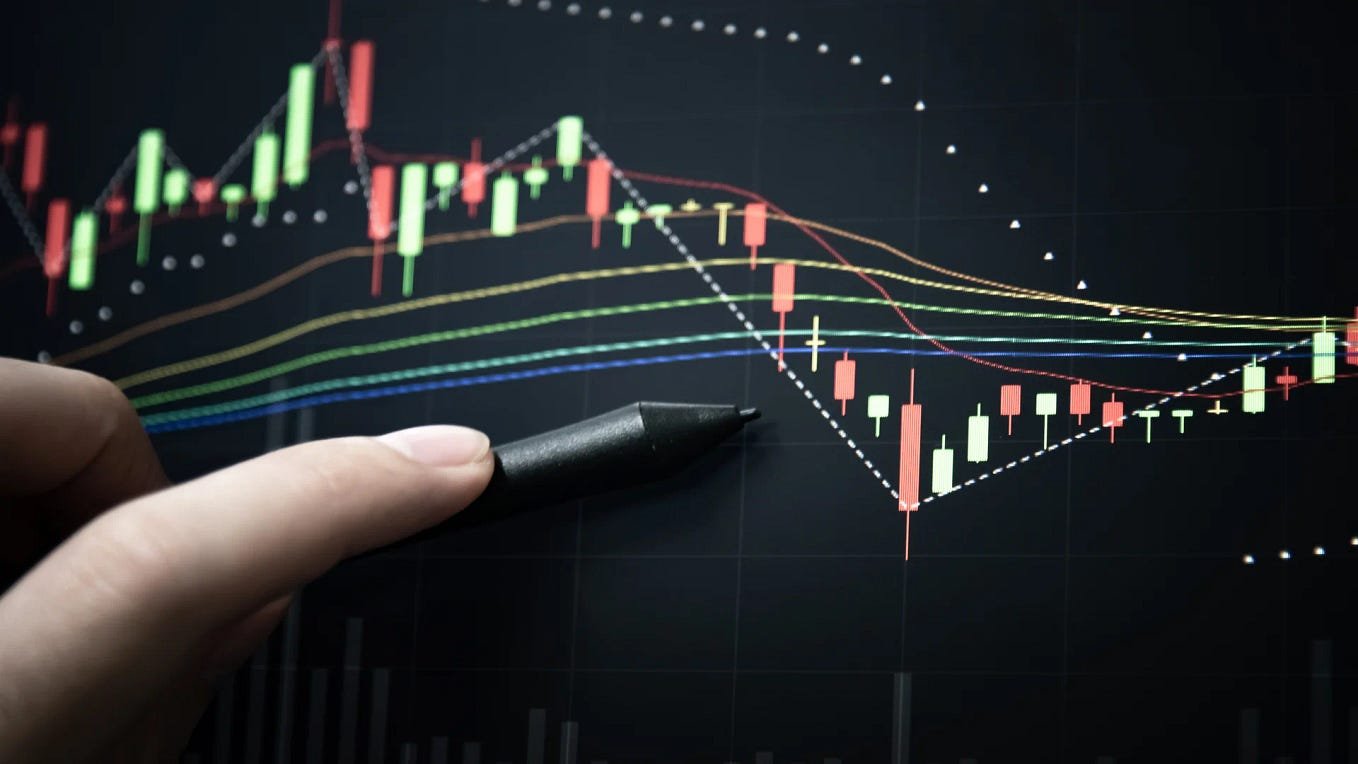
Technical analysis trading signals work by processing mathematical formulas applied to price and volume data. These calculations produce visual representations on charts that traders can interpret to make trading decisions.
The Signal Generation Process
The process begins with data collection, where historical price information (open, high, low, close) and volume data are gathered. This raw data feeds into various algorithms that calculate indicator values based on specific mathematical formulas.
Once calculated, these values are plotted on charts alongside price action, creating visual signals that traders can easily interpret. Different indicators use different time periods and calculation methods, resulting in various types of signals with unique characteristics and applications.
Signal Interpretation
Successful signal interpretation requires understanding both the technical aspects of each indicator and the market context in which signals appear. A single signal should never be used in isolation; instead, traders should look for confluence between multiple indicators to increase the probability of successful trades.
Popular Technical Analysis Trading Signals and Indicators
Moving Average Convergence Divergence (MACD)
The MACD is one of the most reliable technical analysis trading signals available to traders. This momentum oscillator calculates the difference between two exponentially weighted moving averages, typically the 12-period and 26-period EMAs.
Signal Generation: MACD generates signals through crossovers between the MACD line and signal line, as well as through divergences between the indicator and price action. Bullish signals occur when the MACD line crosses above the signal line, while bearish signals appear when it crosses below.
Practical Application: Traders often use MACD in conjunction with other indicators to confirm trend changes and momentum shifts. The histogram component provides additional insight into the strength of the trend.
Relative Strength Index (RSI)
The RSI is a momentum oscillator that measures the speed and magnitude of price changes. This popular technical analysis trading signal ranges from 0 to 100 and helps identify overbought and oversold conditions.
Signal Interpretation: RSI values above 70 typically indicate overbought conditions, suggesting a potential price decline. Values below 30 suggest oversold conditions and potential buying opportunities. However, these levels can remain extreme for extended periods during strong trends.
Advanced RSI Strategies: Experienced traders look for RSI divergences, where the indicator moves in the opposite direction of price, often signaling potential reversals. Hidden divergences can also provide valuable insights into trend continuation patterns.
Bollinger Bands
Bollinger Bands consist of a middle moving average line with two standard deviation bands above and below. These technical analysis trading signals help identify volatility and potential support and resistance levels.
Signal Generation: Prices touching or breaking through the outer bands often signal overbought or oversold conditions. Band squeeze patterns, where the bands contract, often precede significant price movements.
Trading Applications: The bands adapt to market volatility, expanding during volatile periods and contracting during quiet phases. This dynamic nature makes Bollinger Bands particularly useful for identifying breakout opportunities.
Chart Patterns in Technical Analysis Trading Signals
Continuation Patterns
Flag and Pennant Patterns are short-term continuation patterns that appear after strong price movements. These patterns typically resolve in the direction of the prevailing trend, providing excellent entry opportunities for trend-following traders.
Triangle Patterns form when price action creates converging trend lines. Symmetrical triangles are neutral patterns, while ascending and descending triangles have directional bias based on their structure.
Reversal Patterns
Head and Shoulders patterns are among the most reliable reversal signals in technical analysis. The classic head and shoulders pattern signals a trend reversal from bullish to bearish, while the inverse pattern suggests the opposite.
Double Top and Double Bottom patterns occur when price tests the same level twice without breaking through. These patterns often signal the end of the current trend and the beginning of a reversal.
Cup and Handle patterns are bullish continuation patterns that resemble a tea cup when viewed on a chart. The “cup” forms a rounded bottom, while the “handle” creates a slight downward drift before the breakout.
Support and Resistance in Trading Signals
Support and resistance levels are fundamental components of technical analysis trading signals. These horizontal price levels represent areas where buying and selling pressure typically concentrate.
Identifying Support and Resistance
Historical Price Levels often act as support and resistance based on previous market reactions. Round numbers and significant highs and lows frequently serve as psychological barriers.
Volume Profile Analysis helps identify price levels where significant trading activity occurred, creating potential support and resistance zones.
Fibonacci Retracements provide mathematically derived support and resistance levels based on key Fibonacci ratios applied to significant price moves.
Trading Support and Resistance
Successful traders use support and resistance levels to plan entries, exits, and stop-loss placements. Breakouts above resistance or below support often signal significant price movements, while bounces from these levels provide shorter-term trading opportunities.
Volume Analysis in Technical Analysis Trading Signals
Volume plays a crucial role in confirming price movements and identifying potential reversals. Technical analysis trading signals that incorporate volume analysis often provide more reliable trading opportunities.
Volume Indicators
On-Balance Volume (OBV) accumulates volume based on price direction, helping traders identify whether volume supports price trends. Rising OBV with rising prices confirms upward momentum, while declining OBV with rising prices suggests weakening momentum.
Volume Weighted Average Price (VWAP) calculates the average price weighted by volume, providing a benchmark for institutional trading activity. Prices above VWAP suggest bullish sentiment, while prices below indicate bearish conditions.
Accumulation/Distribution Line combines price and volume to show whether a security is being accumulated or distributed. This indicator helps identify potential reversals before they become apparent in price action.
Advanced Technical Analysis Trading Signals
Harmonic Patterns
Harmonic patterns are geometric price patterns that use Fibonacci ratios to identify potential reversal points. These advanced technical analysis trading signals require precise measurement and calculation but can provide highly accurate entry and exit points.
Gartley Pattern is one of the most common harmonic patterns, consisting of four distinct price legs with specific Fibonacci relationships. When properly identified, Gartley patterns often provide excellent risk-reward trading opportunities.
Butterfly and Bat Patterns are variations of harmonic patterns that offer alternative geometric relationships. These patterns require specialized software for accurate identification but can be highly profitable when traded correctly.
Elliott Wave Theory
Elliott Wave Theory proposes that market prices move in predictable wave patterns based on crowd psychology. This advanced form of technical analysis trading signals requires extensive study and practice to master effectively.
Wave Counting involves identifying the five-wave impulse pattern and three-wave corrective pattern that forms the foundation of Elliott Wave analysis. Accurate wave counting can provide insight into future price targets and reversal points.
Fibonacci Relationships play a crucial role in Elliott Wave analysis, helping traders identify wave extensions, retracements, and price targets. These mathematical relationships often coincide with significant support and resistance levels.
Risk Management with Trading Signals
Effective risk management is essential when using technical analysis trading signals. Even the most accurate signals can fail, making proper risk control paramount to long-term trading success.
Position Sizing
Fixed Dollar Risk involves risking the same dollar amount on each trade regardless of position size. This approach helps maintain consistent risk exposure across different trading opportunities.
Percentage Risk involves risking a fixed percentage of trading capital on each trade, typically between 1-3% for most traders. This method adjusts position size based on account equity, providing protection during losing streaks.
Stop-Loss Placement
Technical Stop-Losses are placed based on technical levels such as support and resistance, trend lines, or pattern boundaries. These stops honor the technical analysis that generated the trade signal.
Volatility-Based Stops adjust to market conditions using indicators like Average True Range (ATR) to set appropriate stop-loss distances. This approach accounts for varying market volatility levels.
Technology and Tools for Technical Analysis Trading Signals
Modern trading platforms provide sophisticated tools for generating and analyzing technical analysis trading signals. These technological advances have democratized access to professional-grade analysis tools.
Trading Platforms
Desktop Platforms offer comprehensive charting capabilities with advanced technical indicators, pattern recognition, and backtesting features. Popular platforms include MetaTrader, TradingView, and ThinkOrSwim.
Mobile Applications allow traders to monitor signals and execute trades from anywhere. These apps typically offer essential technical analysis tools optimized for smaller screens and touch interfaces.
Automated Signal Generation
Expert Advisors and automated trading systems can generate and execute trades based on predefined technical analysis trading signals. These systems remove emotional decision-making from the trading process.
Alert Systems notify traders when specific technical conditions are met, allowing for timely response to trading opportunities without constant chart monitoring.
Common Mistakes in Using Technical Analysis Trading Signals
Over-Reliance on Signals
Many traders make the mistake of following signals blindly without considering market context or risk management principles. Successful trading requires combining technical analysis trading signals with sound judgment and proper risk control.
Ignoring Market Context
Technical signals should be interpreted within the broader market context. Economic events, news releases, and overall market sentiment can override technical signals, making context awareness crucial.
Poor Signal Confirmation
Using single indicators without confirmation from multiple sources often leads to false signals and trading losses. The most reliable trading opportunities typically show confluence between multiple technical analysis trading signals.
Future of Technical Analysis Trading Signals
The evolution of technology continues to transform how traders generate and use technical analysis trading signals. Artificial intelligence and machine learning are increasingly being integrated into signal generation systems.
AI and Machine Learning
Pattern Recognition algorithms can identify complex chart patterns and market conditions that might be missed by human analysis. These systems continuously learn and adapt to changing market conditions.
Sentiment Analysis incorporates social media, news sentiment, and alternative data sources to enhance traditional technical analysis trading signals. This multi-dimensional approach provides a more complete market picture.
Quantum Computing Impact
Future quantum computing capabilities may revolutionize technical analysis by enabling real-time processing of vast amounts of market data and complex pattern recognition that surpasses current technological limitations.
Conclusion
Mastering technical analysis trading signals is a journey that requires dedication, practice, and continuous learning. These powerful tools provide traders with the ability to make informed decisions based on objective market data rather than emotions or speculation. By understanding the various types of signals, their applications, and limitations, traders can develop robust strategies that capitalize on market opportunities while managing risk effectively.
The key to success with technical analysis trading signals lies in combining multiple indicators, understanding market context, and maintaining disciplined risk management practices. As technology continues to evolve, these signals will become even more sophisticated and accessible to traders at all levels.
Read more:Bitcoin News Today Latest Updates, Price Analysis & Market Trends 2025