ADA Price 2025: Why Cardano Won’t Repeat 2022 Collapse
Discover why ADA price 2025 trends differ from Cardano's 2022 crash. Expert analysis reveals key factors preventing history from repeating.

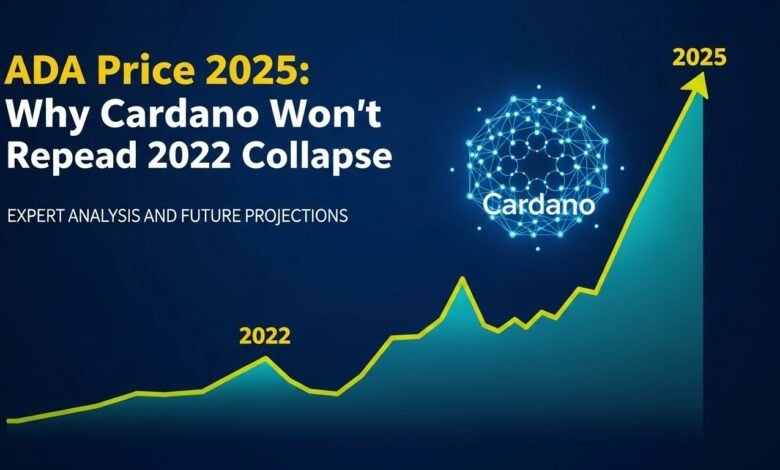
The ADA price 2025 Cardano trajectory will mirror the painful collapse experienced in 2022. The answer, backed by fundamental analysis and market dynamics, suggests a resoundingly different outcome. Unlike the speculative frenzy that preceded the 2022 downturn, today’s Cardano landscape is built on stronger technological foundations, genuine adoption metrics, and a more mature cryptocurrency ecosystem. This comprehensive analysis explores why the current ADA price environment stands at a crossroads that diverges significantly from the path taken three years ago, offering investors both caution and optimism in equal measure.
Cardano’s 2022 Collapse: A Historical Context
The 2022 cryptocurrency market crash wasn’t isolated to Cardano—it was a systematic unraveling of inflated valuations across the entire digital asset space. However, ADA experienced particularly acute pressure during this period. From its all-time high of approximately $3.10 in September 2021, ADA price plummeted to under $0.25 by December 2022, representing a staggering 90% decline that left many investors reeling.
Several interconnected factors contributed to this dramatic fall. The Federal Reserve’s aggressive interest rate hiking cycle made risk assets less attractive, pulling capital away from speculative investments like cryptocurrencies. The collapse of major crypto entities like Terra/LUNA, Three Arrows Capital, and ultimately FTX created cascading liquidity crises that affected even fundamentally sound projects. Cardano wasn’t immune to this contagion effect, despite having no direct exposure to these failing platforms.
Additionally, 2022 marked a period where Cardano’s development progress, while steady, wasn’t translating into the explosive decentralized application growth that investors had anticipated following the Alonzo hard fork. The gap between promise and reality became a focal point for critics, creating selling pressure that compounded broader market weakness.
The Macroeconomic Storm of 2022
The macroeconomic environment of 2022 created perfect conditions for risk asset destruction. Inflation reached forty-year highs, forcing central banks worldwide to abandon accommodative policies. The liquidity that had flooded into cryptocurrency markets during 2020-2021 evaporated rapidly as quantitative tightening began in earnest.
For Cardano, this meant that retail and institutional investors alike were forced to liquidate positions regardless of their long-term conviction. The ADA cryptocurrency became part of a broader portfolio rebalancing away from high-risk, high-volatility assets toward traditional safe havens and yield-bearing instruments.
Why ADA Price 2025 Cardano Fundamentals Look Different
Fast forward to 2025, and the landscape surrounding Cardano has transformed fundamentally. The network has achieved several critical technological milestones that were merely roadmap items during the 2022 collapse. The successful implementation of Hydra scaling protocols has dramatically improved transaction throughput, addressing one of the primary criticisms leveled at the platform.
Cardano’s decentralized governance through Project Catalyst has matured into one of the most active community-driven funding mechanisms in blockchain. With over 1,200 projects funded and a treasury worth hundreds of millions of dollars, the ecosystem demonstrates genuine grassroots development that wasn’t present in 2022. This organic growth provides a fundamental support structure for ADA price that didn’t exist during the previous downturn.
The regulatory environment has also evolved significantly. While 2022 was characterized by uncertainty and regulatory threats, 2025 sees clearer frameworks emerging globally. Cardano’s proactive approach to compliance and its emphasis on formal verification methods position it favorably within this new regulatory landscape, potentially attracting institutional capital that was previously sidelined.
Real-World Adoption Metrics Show Tangible Progress
Unlike the speculative adoption claims of 2021-2022, Cardano now demonstrates measurable real-world utility. Several African nations have implemented identity solutions built on Cardano, affecting millions of citizens. The Ethiopian Ministry of Education’s partnership, which was announced but not fully implemented during the last cycle, now processes credentials for over five million students.
The decentralized finance ecosystem on Cardano has matured significantly. Total value locked in Cardano DeFi protocols has grown organically, supported by battle-tested smart contracts and improved user experience. Projects like Minswap, Indigo Protocol, and Liqwid have demonstrated staying power through market cycles, building user bases that engage with the platform daily rather than merely speculating on token prices.
Enterprise adoption represents another divergence from 2022. Major corporations are now building on Cardano for supply chain verification, carbon credit tracking, and other use cases that generate consistent network activity. This enterprise engagement provides revenue streams and utility independent of speculative trading, creating a more resilient foundation for ADA price appreciation.
Market Structure and Investor Composition Have Evolved
The composition of ADA holders in 2025 differs markedly from 2022. Blockchain analytics reveal a significant reduction in speculative short-term holders and a corresponding increase in long-term holders who haven’t moved their ADA in over twelve months. This shift indicates a maturation of the investor base from momentum traders to conviction-based holders.
Institutional accumulation patterns also tell a different story. While institutional interest in 2021-2022 was largely exploratory, current institutional positions reflect strategic allocations based on fundamental analysis of Cardano’s technological roadmap and adoption metrics. Several cryptocurrency funds have increased their Cardano allocations specifically because the network’s development progress has derailed speculative concerns.
The derivatives market for ADA shows healthier dynamics compared to 2022. Open interest is lower relative to market capitalization, suggesting less leverage in the system. The funding rates on perpetual futures contracts remain neutral to slightly positive, indicating balanced sentiment rather than the extreme leveraged long positions that characterized the 2021 top and preceded the 2022 collapse.
Reduced Correlation with Broader Crypto Market
One of the most significant developments for ADA price 2025 Cardano outlook is the decreasing correlation with Bitcoin and broader cryptocurrency market movements. While Cardano still moves with general market trends, the correlation coefficient has declined from above 0.9 in 2022 to approximately 0.7 in recent months.
This reduced correlation suggests that Cardano is developing its own fundamental value drivers independent of macro crypto sentiment. As the network’s utility increases and its user base diversifies, ADA price action increasingly reflects Cardano-specific developments rather than merely tracking Bitcoin’s movements. This differentiation provides potential downside protection if broader crypto markets experience volatility.
Technical Development Roadmap Provides Clear Catalysts
The Cardano development roadmap for 2025 and beyond offers concrete catalysts that were absent during the 2022 period. The upcoming Voltaire era implementation will complete Cardano’s transition to full decentralization, marking a historic milestone for the network. This represents the culmination of years of methodical development and delivers on promises made at the project’s inception.
Plutus V3 enhancements are significantly improving the developer experience on Cardano, addressing longstanding criticisms about the difficulty of building on the platform. These improvements are already attracting developers from other ecosystems, particularly those frustrated with high fees and network congestion on competing smart contract platforms.
Interoperability solutions are another key differentiator. Cardano’s approach to cross-chain communication through sidechains and bridges is being implemented with the same rigorous academic approach that characterizes all of the project’s development. As these solutions go live, ADA could benefit from increased capital flow between ecosystems, expanding the total addressable market for Cardano-based applications.
Partner Chain Architecture Opens New Possibilities
The Partner Chain architecture represents a paradigm shift for Cardano scalability and flexibility. Unlike the monolithic approach that limited options in 2022, Partner Chains allow entities to create customized blockchain environments that inherit Cardano’s security while maintaining sovereignty over parameters like consensus mechanisms and transaction fees.
This architecture is already attracting projects that need blockchain infrastructure but require customization beyond what a single chain can provide. Each Partner Chain represents a new use case and user base for the Cardano ecosystem, creating network effects that compound over time. The ADA price potential from this expanding ecosystem architecture wasn’t on anyone’s radar during the 2022 downturn.
Macroeconomic Tailwinds vs. 2022 Headwinds
The macroeconomic backdrop for cryptocurrency investment 2025 stands in stark contrast to the hostile environment of 2022. Central banks have paused or reversed interest rate increases, with some beginning cautious easing cycles. This shift creates a more favorable environment for risk assets generally and cryptocurrencies specifically.
Inflation concerns, while not eliminated, have moderated from the crisis levels of 2022. This moderation reduces the urgency for aggressive monetary tightening, allowing capital to flow back into growth-oriented investments. Cardano, with its strong technological foundation and growing adoption, is well-positioned to benefit from this renewed risk appetite.
The traditional financial system’s increasing integration with blockchain technology creates additional tailwinds. Major banks and financial institutions are no longer dismissing cryptocurrencies but actively exploring integration opportunities. Cardano’s emphasis on regulatory compliance and formal verification makes it an attractive partner for these institutions, potentially channeling significant capital into the ecosystem.
Global Liquidity Conditions Favor Risk Assets
Global liquidity conditions show early signs of improvement after the drought of 2022-2023. Central bank balance sheets, which contracted sharply during quantitative tightening, have stabilized and show tentative expansion in some regions. This liquidity finds its way into financial markets, including cryptocurrency markets, creating upward pressure on asset prices.
The U.S. dollar’s strength, which peaked in late 2022 and crushed dollar-denominated assets, including ADA, has moderated. A weaker dollar environment typically correlates with stronger performance for cryptocurrencies, as international investors find dollar-based assets more attractive and U.S. investors seek inflation hedges.
Risk Factors That Could Challenge the Bullish Thesis
While the case for differentiation from 2022 is strong, the ADA price in 2025 for Cardano investors must remain cognizant of potential risks. Regulatory developments, while generally improving, could still deliver negative surprises. Aggressive enforcement actions or restrictive legislation in major markets could create selling pressure regardless of Cardano’s fundamentals.
Competition in the smart contract platform space has intensified rather than diminished. Ethereum’s successful transition to proof-of-stake and subsequent upgrades have addressed some of its historical weaknesses. Layer-2 solutions on Ethereum are capturing significant market share in the decentralized finance space, potentially limiting Cardano’s growth opportunity.
Technical development risks also persist. While Cardano’s methodical approach ensures quality, it also means slower deployment compared to move-fast competitors. If critical features experience delays or technical issues emerge post-deployment, investor sentiment could deteriorate rapidly. The cryptocurrency market remains unforgiving of execution failures.
Market Sentiment Remains a Wild Card
Perhaps the greatest risk factor is market sentiment itself. Cryptocurrency markets are driven as much by psychology and momentum as by fundamentals. A negative catalyst elsewhere in the crypto ecosystem—another exchange failure, a major hack, or a technical failure at a prominent project—could trigger risk-off behavior that impacts all altcoins, including ADA.
The shadow of 2022 still looms large in investor consciousness. Many current market participants experienced devastating losses during that period and may be quick to sell at the first sign of trouble, creating self-fulfilling downward spirals. This trauma-induced risk aversion could overwhelm positive fundamentals in the near term.
Price Prediction Frameworks vs. Historical Patterns
When analyzing Cardano price prediction scenarios for 2025, multiple frameworks suggest outcomes divergent from 2022’s collapse. On-chain metrics like active addresses, transaction volume, and smart contract deployments all trend positively, supporting a bullish fundamental case. These metrics show steady growth rather than the parabolic spikes that preceded 2022’s crash.
Valuation models based on network utility suggest ADA remains undervalued relative to its technological capabilities and adoption trajectory. Unlike 2022, when ADA traded at elevated multiples relative to network activity, current valuations appear conservative when benchmarked against comparable blockchain platforms.
Technical analysis patterns also differ significantly. The ADA price has formed a multi-year base pattern characteristic of accumulation rather than distribution. This base-building phase, while frustrating for short-term traders, typically precedes sustained upward movements rather than capitulation events like 2022.
H3: Network Value to Transactions Ratio Signals Health
The Network Value to Transactions ratio for Cardano has compressed significantly from 2021-2022 levels, indicating that current market capitalization is better supported by actual network usage. This metric suggests that speculative excess has been wrung out of ADA price, creating a healthier foundation for appreciation based on adoption growth rather than pure speculation.
Conclusion
The evidence strongly suggests that ADA price 2025 Cardano dynamics differ fundamentally from the conditions that precipitated the 2022 collapse. Technological maturation, genuine adoption metrics, improved market structure, favorable macroeconomic conditions, and lessons learned from the previous cycle all combine to create a distinctly different environment.
This doesn’t guarantee perpetual upside or eliminate all risks—cryptocurrency investment always carries substantial volatility. However, investors evaluating Cardano should base their decisions on current fundamentals and forward-looking catalysts rather than fighting the last war. The Cardano ecosystem of 2025 bears little resemblance to the speculative vehicle of 2021-2022, and treating it as such misses critical developments.
For those considering ADA cryptocurrency exposure, the current crossroads represents a potential inflection point. The foundations for sustainable growth exist in ways they didn’t during the previous cycle. Whether you’re a long-term holder, a new investor evaluating Cardano, or someone who exited during the 2022 crash, understanding why 2025 isn’t a repeat of that painful period is essential for making informed decisions about ADA price exposure going forward.
See more: Latest Bitcoin Price News Today Live Updates & Market Analysis 2025