Bitcoin News Update: El Salvador Bets on Bitcoin as a Sovereignty Safeguard, Challenging IMF Conditions
El Salvador doubles down on Bitcoin as a sovereignty tool, defying IMF conditions and reshaping the global debate on money, power and national independence.

El Salvador Bets. In the latest Bitcoin news update, El Salvador is once again at the center of a global debate that goes far beyond crypto prices. Since 2021, the country has treated Bitcoin as legal tender, turning a small Central American nation into a live experiment in digital money, fiscal autonomy and geopolitical power.
Today, that experiment is colliding head-on with the traditional financial order. El Salvador has secured a multi-year financing package from the International Monetary Fund (IMF), reportedly in the range of $1.4–$3.5 billion depending on the phase and source, and in return has agreed to scale back certain aspects of its public-sector Bitcoin exposure. Yet even under these IMF conditions, President Nayib Bukele’s government continues to accumulate Bitcoin via a Strategic Bitcoin Reserve and its National Bitcoin Office, insisting that the country’s long-term sovereignty depends on maintaining, not reducing, its Bitcoin strategy. El Salvador Bets.
This tension between IMF loan conditions and El Salvador’s crypto ambitions is not just a local story. It’s a test case for how far a nation can go in using decentralized digital assets to loosen its dependence on global lenders, the U.S. dollar and traditional capital markets. In other words, this is not just a crypto headline; it is a sovereignty story. El Salvador Bets.
In this article, we unpack how El Salvador is using Bitcoin as a sovereignty safeguard, what the IMF is demanding in return for much-needed funding, what is actually happening on the ground, and what this evolving standoff means for investors, policymakers and anyone following Bitcoin news updates around the world.
How El Salvador Turned Bitcoin into a Sovereignty Tool
From Dollar Dependence to Bitcoin Legal Tender
Before Bitcoin entered the picture, El Salvador had already surrendered a key piece of its monetary sovereignty. Like several Latin American countries, it had adopted the U.S. dollar as its main currency, effectively outsourcing monetary policy to the Federal Reserve. That helped stabilize inflation but left the country with limited tools to respond to shocks or negotiate with international creditors.
In June 2021, Bukele announced that El Salvador would become the first nation in the world to adopt Bitcoin as legal tender, a move Congress quickly approved. The government argued that Bitcoin could boost financial inclusion, reduce remittance fees, attract foreign investment and help the country break out of its historical dependence on the dollar and multilateral lenders.
From the start, the symbolism was as important as the economics. By making Bitcoin legal tender and steadily buying BTC for its treasury, the country sent a message that it wanted a parallel monetary rails system that did not run exclusively through Washington, Wall Street or the IMF. Bitcoin, in this narrative, isn’t merely a volatile asset; it’s a digital shield for monetary sovereignty.
Of course, the rollout was bumpy. The state-backed Chivo wallet suffered technical issues, adoption among merchants was uneven, and Bitcoin’s price crashes translated into mark-to-market losses on the country’s holdings. Nonetheless, the administration framed these as short-term turbulence on the road to a more autonomous financial future.El Salvador Bets.
The Strategic Bitcoin Reserve and Daily Purchases
Over time, El Salvador refined its approach. As the country accumulated thousands of BTC, the government established a Strategic Bitcoin Reserve, treated separately from the broader public-sector balance sheet. Public statements from officials and on-chain trackers indicate that El Salvador continues to add to this reserve, sometimes via a “one Bitcoin per day” strategy and occasionally through larger opportunistic purchases during price dips.
According to various reporting, the country’s holdings have grown to several thousand BTC, worth hundreds of millions of dollars, despite IMF pressure to curb further accumulation. Even when global markets wobble, government officials present each Bitcoin news update about new purchases as proof of long-term conviction and as a hedge against what they view as the inflationary risks of the global fiat system. El Salvador Bets.
The key here is structure. By emphasizing that the Strategic Bitcoin Reserve and National Bitcoin Office are distinct from other public entities, Salvadoran officials argue that they can continue to acquire BTC while still complying with the letter—if not the spirit—of certain IMF constraints. This legal and accounting finesse is exactly what transforms the strategy from a simple investment into a sovereignty maneuver.
Inside the IMF Deal: Conditions, Concerns and Crypto Limits
Why the IMF Wants El Salvador to Slow Down on Bitcoin
The IMF’s concerns are not subtle. Since El Salvador adopted Bitcoin as legal tender, the Fund has repeatedly warned about risks to financial stability, fiscal integrity and consumer protection, arguing that large-scale public exposure to such a volatile asset could worsen debt dynamics and destabilize the banking system.
When El Salvador negotiated its multi-year IMF program, one of the explicit conditions was to limit public-sector involvement in crypto, particularly new Bitcoin purchases by the government. Recent IMF reports and public comments stress that the authorities have committed not to increase overall public-sector Bitcoin holdings and to downgrade the role of BTC in daily government operations, including tax payments.
For the IMF, these steps are about risk management and preserving the integrity of the loan program. For El Salvador, they are compromises that stop short of abandoning Bitcoin as a macro hedge and symbol of independence.
Creative Loopholes: Strategic Reserve vs Public Sector Cap
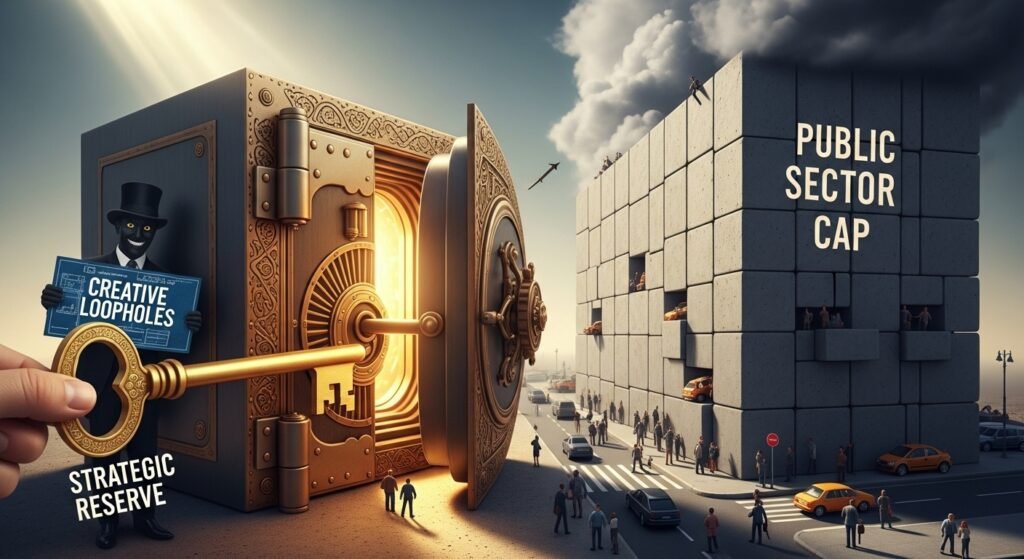
This is where the story gets especially interesting. Even as IMF statements suggest that El Salvador should not increase its Bitcoin holdings at the public-sector level, the country’s National Bitcoin Office continues to post about fresh purchases and a growing Strategic Bitcoin Reserve.
In some accounts, the IMF has acknowledged that recent additions to this reserve are technically consistent with the agreed conditionality, implying that there is a nuanced distinction between certain entities and the “overall public sector.That ambiguity gives Bukele’s administration room to keep stacking sats while still accessing desperately needed external financing.
From a Bitcoin sovereignty perspective, this dual-track approach is strategic. The country receives IMF funds to stabilize its budget, refinance debt and support reforms, while quietly preserving and even growing a BTC cushion that could, in theory, offer leverage in future negotiations or crises.
Critics argue that this is a risky game. If Bitcoin prices fall sharply, the mark-to-market value of those holdings can drop by hundreds of millions of dollars, potentially undermining fiscal credibility. However, supporters see it as a long-duration bet: a way to swap reputation risk today for potential monetary breathing room tomorrow.
Economic Impact at Home: Adoption, Volatility and Tourism
What Ordinary Salvadorans Are Experiencing
Behind every headline-grabbing Bitcoin news update is a country of roughly 6.5 million people who must live with the consequences of this grand experiment. On the ground, Bitcoin adoption has been mixed. While some Salvadorans use BTC for remittances or everyday purchases, surveys suggest that many still prefer cash dollars for daily life, partly due to volatility and habit.
Yet the Bitcoin push has undeniably changed the country’s economic landscape. Crypto tourism has grown, with enthusiasts traveling to El Salvador to pay with BTC at hotels, surf spots and coffee shops, and to see “Bitcoin Beach” and prospective Bitcoin City firsthand. The government also touts new tech start-ups, conferences and foreign investors drawn by its crypto-friendly posture.
At the same time, ordinary Salvadorans face the same challenges as before: low wages, emigration pressures, crime concerns and limited access to high-quality jobs. Bitcoin has not magically solved these structural issues. Instead, it operates in the background as an additional layer of opportunity and risk within an already complex socio-economic reality.
Bitcoin City, Infrastructure and Environmental Questions
One of the most ambitious components of El Salvador’s plan is Bitcoin City, a proposed tax-advantaged, crypto-powered urban hub near the Pacific coast, intended to attract large-scale investment and position the country as a global fintech and blockchain hub.
Construction efforts for Bitcoin City and related infrastructure, such as a new Pacific airport, have sparked controversy. Reports highlight displacement of local communities and environmental concerns, including damage to mangrove forests that play a crucial role in coastal protection and biodiversity.
This tension underscores a broader theme: Bitcoin-driven development can bring in capital and attention, but without strong safeguards it can also replicate familiar patterns of uneven growth, where the benefits are concentrated among investors and elites while local communities bear the costs.
From an SEO perspective, this is a critical part of any honest Bitcoin news update on El Salvador: the story is not just charts and reserves; it is people, land, and long-term sustainability.
Geopolitical Stakes: Small Country, Big Signal
A Template for Other Sovereign Bitcoin Experiments?
El Salvador may be small, but the signal it sends to other countries is outsized. By insisting that Bitcoin remains legal tender and that accumulation will continue—albeit in carefully structured ways—Bukele is challenging the long-standing assumption that nations must fully align their monetary policy with the preferences of institutions like the IMF.
Other emerging markets with heavy sovereign debt burdens and volatile currencies are watching closely. If El Salvador manages to grow its economy, maintain access to external financing and see its Bitcoin holdings appreciate over time, it could inspire similar experiments in countries looking for leverage against traditional creditors.
On the other hand, if the strategy backfires—through prolonged Bitcoin bear markets, fiscal distress or a breakdown in its IMF program—it could become a cautionary tale and strengthen the hand of those arguing that crypto assets are too volatile and too politically charged to be integrated into national balance sheets.
Either way, the choices El Salvador makes today are helping to define the boundaries of what sovereign Bitcoin adoption looks like in practice.
What This Bitcoin News Update Means for Investors
Understanding the Risk Landscape
For investors tracking this Bitcoin news update, the key is not to see El Salvador as a simple bullish or bearish signal. Instead, it should be understood as part of a broader trend where nation-states, institutional lenders and decentralized networks are all jockeying for influence over the future of money. El Salvador Bets.
On one side, you have the IMF and other multilateral institutions, which prioritize stability, regulatory compliance and gradual reform. On the other, you have a country willing to endure volatility and reputation risks in exchange for the potential upside of Bitcoin as a long-term store of value and geopolitical bargaining chip. El Salvador Bets.
For Bitcoin itself, El Salvador’s continued purchases—even if relatively small compared to global daily trading volumes—add to the narrative of state-level accumulation. That narrative can influence sentiment, particularly during market downturns, by reinforcing the idea that there are long-term, non-speculative buyers in the ecosystem.
Conclusion
El Salvador’s ongoing standoff with the IMF over Bitcoin is one of the most important stories in today’s Bitcoin news updates because it forces a fundamental question: can a nation use a decentralized digital asset to regain leverage in a financial system dominated by creditors, rating agencies and reserve currencies it does not control?
Whether this ultimately counts as a victory for sovereignty will depend on outcomes over the next decade: debt sustainability, economic growth, resilience to external shocks and the social contract between the government and its people. Bitcoin can be a tool for sovereignty, but it is not a shortcut around the hard work of governance, transparency and inclusive development. For now, El Salvador stands as a bold, controversial and deeply instructive case study—a small country using Bitcoin not just for profit, but as a statement about who should control the future of money.
FAQs
Q. Is Bitcoin still legal tender in El Salvador?
Yes. According to recent official statements and IMF reporting, Bitcoin remains legal tender in El Salvador alongside the U.S. dollar. However, its practical role has been adjusted. Tax payments are now limited to dollars, and private acceptance of Bitcoin is more voluntary than mandatory compared with the original 2021 rollout.
Q. What exactly are the IMF conditions on El Salvador’s Bitcoin use?
The IMF’s conditions focus on limiting public-sector exposure to crypto assets. This includes commitments not to increase Bitcoin holdings at the broad public-sector level, to scale back the role of Bitcoin in government operations and payments, and to strengthen regulation and supervision of crypto activities. In exchange, El Salvador receives multi-year financing aimed at stabilizing its economy and supporting reforms.
Q. How is El Salvador still buying Bitcoin if it has an IMF loan?
El Salvador appears to be using entities such as its National Bitcoin Office and a designated Strategic Bitcoin Reserve to continue accumulating BTC. IMF representatives have indicated that recent increases in this reserve can be consistent with agreed program terms, suggesting a nuanced distinction between certain entities and the “overall public sector.” This legal structure allows continued accumulation while formally complying with the loan’s constraints.
Q. Has the Bitcoin strategy helped ordinary Salvadorans so far?
The impact is mixed. Some Salvadorans benefit from cheaper remittances, new jobs in tourism and tech, and the global attention that comes with crypto adoption in El Salvador. Others see little direct benefit and prefer to transact in dollars due to volatility and familiarity. Meanwhile, broader issues like wages, inequality and migration pressures remain, and projects like Bitcoin City have raised concerns about displacement and environmental damage.
Q. What does El Salvador’s Bitcoin bet mean for other countries?
El Salvador’s example sends a strong signal that a country can attempt to use Bitcoin as a strategic asset while still negotiating with institutions like the IMF. If the gamble pays off—through stronger growth, reduced debt stress and appreciating BTC reserves—it could encourage other nations to explore similar paths. If it fails, it may reinforce skepticism about integrating volatile crypto assets into national finance. Either way, this Bitcoin news update marks a pivotal chapter in how states, markets and decentralized money interact.
See more;Bitcoin Breaking News Today Live Latest Updates & Market Analysis 2025